Meet five world traditions
A friendly world tour

Hi, I'm Uri 👋
Let's read a story together, then I'll show you the big idea hiding inside it.
The Good Samaritan
Featuring Jesus of Nazareth (and a stranger on the road)
A traveler was walking the long, dusty road from Jerusalem down to Jericho when robbers jumped out, took everything he had, hurt him badly, and left him on the side of the road.
After a while, a priest came walking by. He saw the man — and crossed to the other side of the road. Soon a temple helper came by. He looked, and he also passed on the other side.
Then a Samaritan came down the road. In those days, Samaritans and the hurt traveler's people did not get along at all; they belonged to different religious groups and did not trust each other.
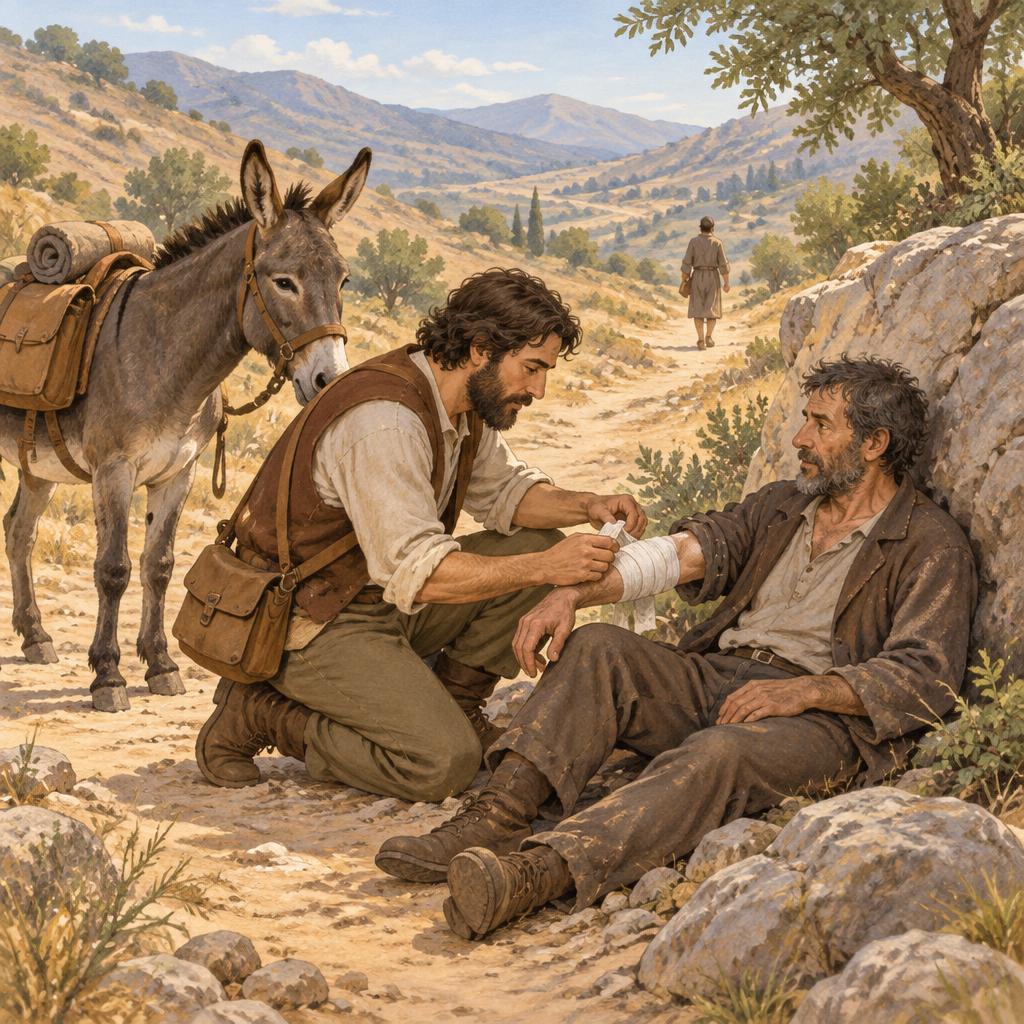
But when the Samaritan saw the traveler, his heart went out to him. He knelt in the dirt, cleaned the wounds, bandaged them, and lifted the man onto his own donkey. He took him to an inn and stayed the night looking after him.
The next morning he gave the innkeeper money. 'Take care of him,' he said, 'and if it costs more, I'll pay you when I come back.'
Jesus finished the story and asked, 'Which of the three was a true neighbor to the man?' The answer was the one who showed mercy — the one from the other tradition.
Jesus was Jewish, and so were the priest, the temple helper, and the man who was hurt. Jesus told this story to his own community to show that being a good neighbor matters more than which group you belong to.
A neighbor isn't just someone who looks like you or prays like you. A neighbor is anyone you choose to be kind to.
Five gardens
Imagine five gardens tended by five different families. Each grows different plants and is cared for in its own way. When the families visit each other's gardens, they learn something new, and each goes home with ideas for their own.
Today's lesson
BUDDHISM began with Siddhartha Gautama, who became the Buddha, 'the Enlightened One.' Many Buddhists meditate to calm and understand the mind, and try to follow the Middle Way and the Five Precepts, like not harming living things.
CHRISTIANITY follows Jesus Christ. Christians believe Jesus is the Son of God, and they try to follow his teaching to love God and love your neighbor. Christians read the Bible and gather in churches.
HINDUISM began in India thousands of years ago. Hindus believe the divine is one, known by many names and forms, and that a spark of the divine lives in every person. They try to follow dharma, a way of right living, and celebrate festivals like Diwali, the festival of lights.
ISLAM is an Arabic word that means surrender and peace. Muslims believe in one God, Allah, and follow the Qur'an and the Five Pillars, which include daily prayer and giving to people in need.
JUDAISM began with Abraham, who taught that there is one God. Jewish people believe God gave the Torah, God's teachings, to Moses at Mount Sinai. Jewish families celebrate Shabbat each week, from Friday sundown to Saturday sundown.
They aren't all the same — and that's okay. Learning about them helps us respect our neighbors.
Today's challenge: Get curious about a neighbor
Pick ONE tradition from today's lesson that you don't know much about. Write one thing you'd like to learn about it — and (bonus!) one question you'd ask someone who practices it.
Join the free 3-day challenge to save your answer and get an email when each new day opens.
Sign up to take the challenge →How's the challenge going?
Share a positive comment about the challenge, or constructive feedback to help us make it better.